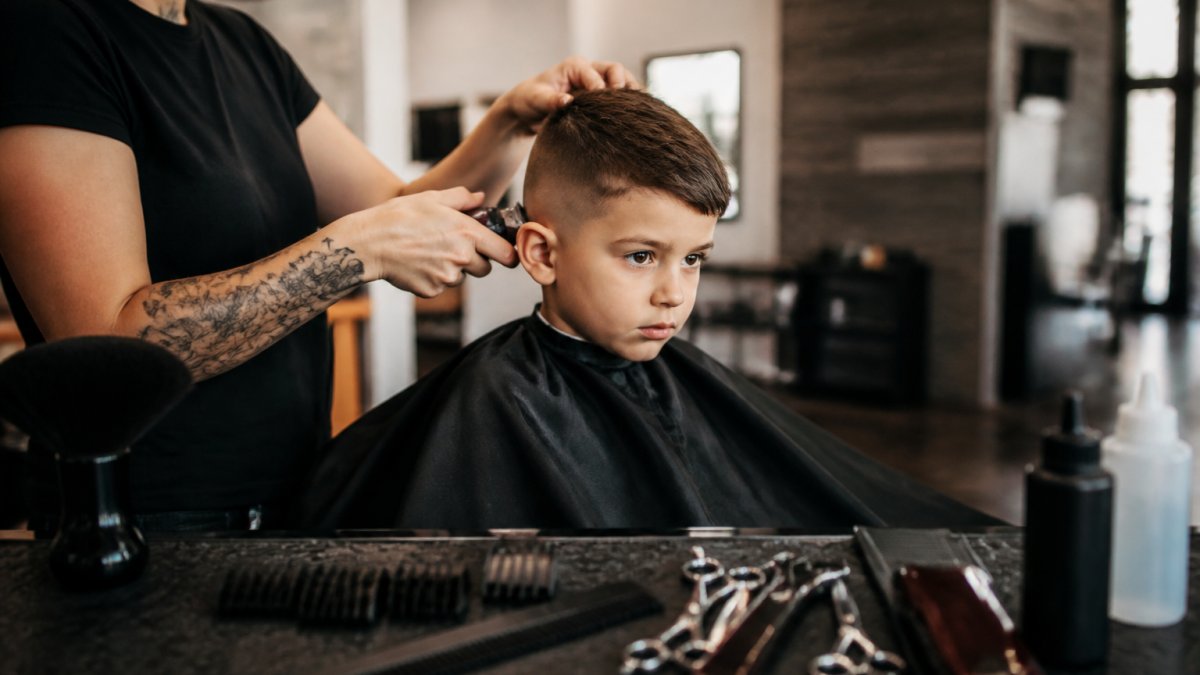
 listicle
Quality Haircuts for Young Boys: Styles & Care Guide
Table of Contents
- What Makes a Quality Haircut for Young Boys
- Trendy Boys' Haircut Ideas for 2026
- Classic and Timeless Haircut Styles for Boys
- Boys Haircuts for Curly Hair and Textured Hair
- Low-Maintenance Haircuts for Boys
- How to Explain a Haircut to a Barber
- How Often Boys Should Get a Haircut
- Choosing the Right Cut for Your Son's Face Shape and Lifestyle
- Frequently Asked Questions
Last Updated: October 5, 2026
What Makes a Quality Haircut for Young Boys
Quality haircuts for young boys combine clean lines, proper technique, and attention to hair health over speed.
Too many parents settle for whatever a chain barbershop can produce in 15 minutes. The result is a cut that looks decent for a week, then grows out unevenly because the foundation wasn't solid.
What separates a quality cut is technique. A barber who understands fade transitions, how to work with texture, and how to shape around the ears will produce results that hold their shape as the hair grows. A rushed cut might look clean on day one, but poor blending shows up fast.
Trendy Boys' Haircut Ideas for 2026
Modern haircuts for young boys blend classic barbering with contemporary style. The best trendy cuts work across different hair types and face shapes, which is why they've stayed popular. Here are the styles that define 2026.
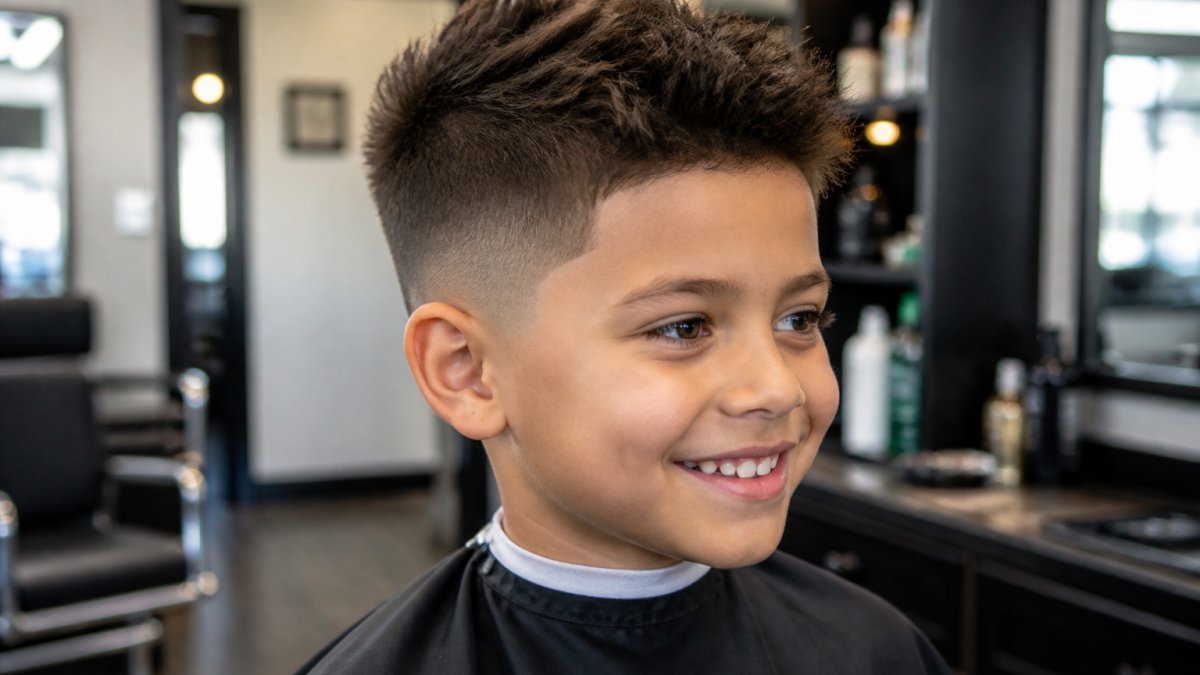
Modern Fades and Tapers
A fade is a gradual transition from short hair on the sides to longer hair on top. Fades work for almost every young boy because they're low-maintenance and look polished. The key is proper blending, a fade should transition smoothly, not drop off abruptly.
Modern fades for 2026 lean toward tighter sides with more texture on top. A skin fade (cut very close at the bottom) paired with a textured, longer top gives boys the ability to style their hair while keeping the sides clean.
A taper is similar to a fade but less dramatic. Instead of going very short at the sides, a taper gradually shortens the hair over a longer distance. Tapers are ideal for boys with curly or textured hair because they don't expose too much scalp while still keeping the sides manageable.
Textured and Layered Cuts
Texture is everything for young boys with straight or wavy hair. A textured cut uses layers and length variation to create movement and reduce bulk. Instead of one uniform length, a textured cut has shorter pieces mixed with longer ones, which creates dimension and makes styling easier.
Layered cuts work well for boys who like to style their hair or who have naturally wavy hair. The layers help the hair sit better and reduce the "helmet head" effect that can happen with one-length cuts. A good layered cut still looks neat for school but gives boys the option to add texture with product if they want.
Spiky and Undercut Styles
Spiky hair is a classic look for young boys, and it's back in 2026. A spiky cut typically has short sides and a longer top that can be styled upward. This style requires some product and daily styling, so it's best for boys who are willing to put in effort or whose parents don't mind helping.
An undercut takes the spiky concept further by creating a sharp contrast between very short sides and a significantly longer top. The undercut is more fashion-forward and works best for older boys or preteens who care about their appearance. It requires regular maintenance because the contrast becomes less defined as the hair grows.
Classic and Timeless Haircut Styles for Boys
Classic haircuts never go out of style because they work across decades and age groups. These cuts are the foundation of quality barbering.
The Crew Cut
The crew cut is short, simple, and professional. It's cut short all over with slightly more length on top than the sides. A crew cut is ideal for young boys because it's easy to maintain, looks neat for school, and works with any hair type.
The crew cut has been the go-to boys' haircut since the 1950s, and it remains popular because it actually works. It requires minimal styling, grows out evenly, and looks appropriate everywhere. For parents who want a low-maintenance style, a crew cut is hard to beat.
Side Part and Slicked Back
A side part is a timeless style where the hair is parted to one side and combed over. This style works for boys with straight or wavy hair and adds a bit of polish without being fussy. A side part can be paired with short sides (like a fade) or kept longer for a more classic look.
The slicked-back style is similar but combs the hair straight back instead of to the side. Both styles require some grooming product and work best for boys who have the patience for styling. These cuts are excellent for special occasions or for boys who like to look polished.
Boys Haircuts for Curly Hair and Textured Hair
Curly and textured hair requires different cutting techniques than straight hair. A barber who understands curly hair will cut it while it's dry to see how the curls actually sit, then shape accordingly.
The best cuts for curly hair work with the natural texture instead of against it. Short, textured cuts that embrace the curl pattern look better and require less styling than trying to fight the curl. A fade with curly hair on top gives definition while keeping the sides manageable.
For very curly or coily hair, longer styles often work better because they allow the curls to stretch and define themselves. A cut that's too short can make curly hair look poofy. A good barber will assess the curl pattern and recommend a length that works with your son's hair, not against it.
Low-Maintenance Haircuts for Boys
Parents with busy schedules need low-maintenance haircuts that don't require daily styling or frequent trims. These cuts grow out evenly and still look decent between appointments.
A crew cut is the ultimate low-maintenance style. It requires no styling, grows out relatively evenly, and looks neat even at the 6-week mark. For boys who hate sitting still for haircuts or whose parents can't get to the barber frequently, a crew cut is the practical choice.
A short fade with minimal length on top is also low-maintenance. As long as the fade is done well, it will hold its shape as the hair grows.
Textured cuts can be low-maintenance if they're kept short enough. The key is choosing a length that doesn't require daily styling to look good. A textured cut that's 2-3 inches on top can look neat without product.
How to Explain a Haircut to a Barber
Communication is where most haircuts fail. Parents often have a vague idea of what they want ("just clean it up") or show a photo that doesn't match their son's hair type.
Start by describing the overall length. Do you want short sides, medium sides, or longer sides?
Describe the style in terms of shape. Is it a fade, a taper, or a crew cut? Does the top go back, to the side, or straight up?
Talk about lifestyle and maintenance. Does your son have time to style his hair daily, or do you need something that looks good without product?
Ask the barber about their assessment of your son's hair. Does he have thick hair, thin hair, curly hair, straight hair? How does that affect the style you want?
How Often Boys Should Get a Haircut
How often boys should get a haircut depends on the style, hair growth rate, and how quickly it looks messy. Most boys need a trim every 4-6 weeks, but the exact timing varies.
A fade typically needs a trim every 3-4 weeks because the contrast between short and long becomes less defined as the hair grows. A crew cut can go 4-5 weeks because it grows out more evenly.
The best indicator is when the cut starts to look sloppy rather than neat. If the sides are growing out and blending into the top, or if the fade is losing definition, it's time for a trim.
Regular trims keep the hair healthy by removing split ends and preventing the style from degrading. A boy who gets a trim every 4 weeks will always look sharp.
Choosing the Right Cut for Your Son's Face Shape and Lifestyle
The best haircut for your son combines his face shape, hair type, lifestyle, and personal preference.
Face shape matters because certain cuts balance features better than others. A boy with a round face benefits from a fade that adds height on top, which makes the face appear longer.
Hair type is non-negotiable. Curly hair needs different cuts than straight hair. Thick hair can handle longer styles that would look heavy on thin hair.
Lifestyle determines maintenance level. If your son plays sports and showers daily, a low-maintenance cut makes sense. If he's willing to style his hair, more textured or longer styles work.
Personal preference matters, too. If your son likes to style his hair or has a specific look he wants, that should guide the choice.
Choosing quality haircuts for young boys means finding a barber who takes time with your son, understands his hair type, and can execute the style you want. Moving away from the rush of chain shops, the studio provides full attention to every client, specializing in razor fades, beard shaping, straight razor shaves, and professional hair color services.
Frequently Asked Questions
What are the best quality haircuts for young boys?
The best quality haircuts for young boys combine clean lines, proper fade or taper work, and a style suited to your son's hair texture and face shape. Trendy options include fades, textured crops, and undercuts; classic choices like crew cuts and side parts work for any occasion. Quality depends on a barber's skill with precision cutting and their ability to listen to what you want. A good barber will discuss your son's hair type, how much styling you're willing to do, and what works for school or daily life.
How do I choose a haircut for my son's hair type?
Start by identifying your son's hair texture: straight, wavy, curly, or coily. Straight and wavy hair work well with fades, tapers, and textured crops. Curly hair looks best with longer cuts on top that show texture, like textured fades or layered styles that work with the curl pattern rather than against it. Discuss your son's hair care routine with the barber, if you prefer low-maintenance, choose cuts that don't require daily styling. A quality barber will recommend styles that work with his natural hair, not against it.
How often should a young boy get a haircut?
Most boys benefit from a fresh cut every 4 to 6 weeks. If your son has a fade or taper, every 4 weeks keeps the lines sharp and prevents the style from looking overgrown. Longer styles and textured cuts can stretch to 6 weeks. The exact schedule depends on how fast his hair grows, how much you like the style to look fresh, and whether he's heading to school or a special event. A quality barber can recommend the best timing based on the specific cut you choose.
What should I tell the barber when asking for a boy's haircut?
Come prepared with a clear description or photo of the style you want. Tell the barber your son's hair type, how much maintenance you're comfortable with, and the occasion (school, everyday, special event). Be specific: mention fade length, top length, whether you want texture or clean lines, and any details like a side part or spiky styling. A good barber will ask follow-up questions about your son's preferences, comfort level, and lifestyle. Don't hesitate to ask questions during the cut if you're unsure about the direction.