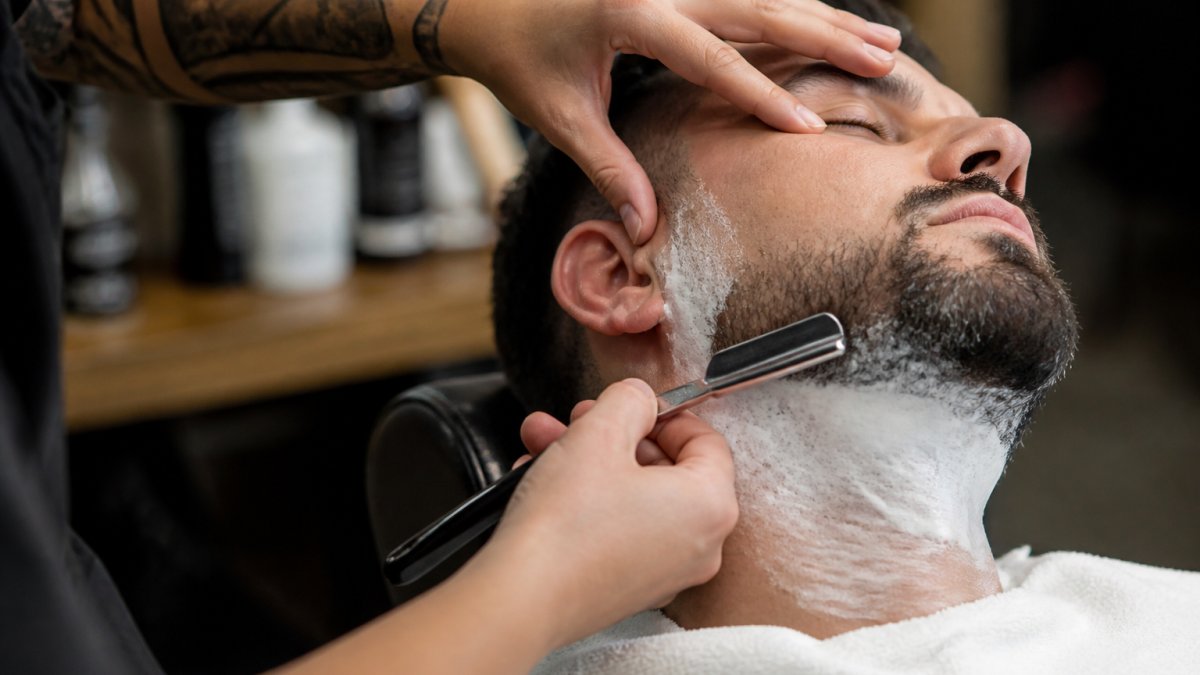
 how-to
What Is Straight Razor Shaving: A Complete Guide
Table of Contents
- What Is Straight Razor Shaving and Why It Matters
- Straight Razor Shaving Benefits You Should Know
- How to Prepare Skin for Straight Razor Shave
- Best Beard Shaping for Men With a Straight Razor
- Step-by-Step Straight Razor Shaving Technique
- Post-Shave Care and Skin Soothing
- Common Mistakes to Avoid
- Straight Razor vs. Safety Razor: Key Differences
- Frequently Asked Questions
Last Updated: October 4, 2026
What Is Straight Razor Shaving and Why It Matters
Straight razor shaving is the practice of using a single-blade, fold-away razor to remove facial hair with precise control and minimal irritation. Unlike multi-blade cartridge razors, a straight razor delivers a clean cut at the skin's surface without the tugging that causes razor burn and ingrown hairs.
The technique takes practice, but the results speak for themselves: a closer shave, healthier skin, and a grooming ritual that feels intentional rather than rushed.
Barbers have used straight razors as the gold standard for professional shaving because they offer control, precision, and longevity. One quality blade lasts decades with proper maintenance, you won't replace it every few weeks like disposable cartridges.
Most men find it takes three to five shaves before the technique clicks, but once it does, straight razor shaving becomes faster and more satisfying than anything else.
Straight Razor Shaving Benefits You Should Know
Closer shave with less irritation. A straight razor cuts hair at the skin line without dragging or tugging. This means fewer ingrown hairs, less razor burn, and skin that feels smooth without the raw feeling that comes from multi-blade cartridges.
Cost savings over time. A quality straight razor costs more upfront, but it lasts a lifetime. You'll never buy replacement cartridges again. The stropping leather and honing stone are minimal expenses compared to what you'd spend on disposable razors over five years.
Exfoliation and skin health. The shaving process itself exfoliates dead skin cells. Combined with proper pre-shave preparation and post-shave care, straight razor shaving can actually improve skin texture and tone over time. Maintaining this renewed surface requires a consistent post shave care routine to lock in moisture and protect the newly revealed skin.
Reduced environmental impact. One razor, maintained properly, eliminates the waste of thousands of plastic cartridges. If sustainability matters to you, straight razor shaving is the choice.
A ritual that feels intentional. Straight razor shaving takes time. You can't rush it. That deliberate pace creates a grooming ritual instead of a chore. Many men find it meditative.
How to Prepare Skin for Straight Razor Shave
Preparation determines success. The right routine varies by skin type, so tailor your pre-shave approach to prevent irritation and deliver better results.
Pre-Shave Oil and Lather Selection
Wash your face with warm water to soften the beard and open pores, then pat dry. Apply pre-shave oil by warming a few drops between your palms and massaging it into your beard in the direction of hair growth; let it sit for 30 seconds.
Build lather with a quality brush (badger hair or synthetic) and cream or soap, working it into a rich, thick consistency. Apply with upward strokes into the beard, proper lather protects your skin and prevents cuts.
Skin-Type-Specific Preparation Protocols
For sensitive skin: Skip alcohol-based products. Use a gentle, fragrance-free pre-shave oil with soothing ingredients like chamomile or oat extract. Allow a full minute of brush work and choose cream over soap for extra emollients. Let the cream sit 30 seconds before shaving. Stick to one careful pass with the grain and finish with a balm-based aftershave containing colloidal oatmeal or allantoin.
For acne-prone skin: Straight razor shaving avoids the tugging of multi-blade razors. Use non-comedogenic pre-shave oil or skip it if prone to congestion. Build lather with a salicylic acid-based cream if tolerated. Keep your brush scrupulously clean and avoid active pustules. Finish with a lightweight, non-comedogenic balm, ideally with niacinamide to reduce sebum and inflammation.
For dry skin: Use a rich, oil-based pre-shave product (jojoba, argan, or coconut oil) and allow it to absorb for a minute. Choose cream over soap for extra humectants and let lather sit 45 seconds to a minute. Stick to one pass with the grain and apply a rich, fragrance-free balm immediately while skin is damp, ideally with ceramides or hyaluronic acid.
Skin Tension and Grain Direction
Understanding grain direction is essential. Run your hand across your beard to feel where it grows smoothly (with the grain) and where it resists (against the grain). Most beards have multiple directions: cheeks grow downward and outward, neck downward, and upper lip and chin are often unpredictable.
Hold your skin tight by stretching it opposite to your shaving stroke, tight skin gives the blade a flat surface; loose skin causes nicks. Start with the grain on your first pass to remove most beard safely. Once comfortable, you can shave across or against the grain for closeness, but this increases irritation and ingrown hair risk. For sensitive or acne-prone skin, avoid shaving against the grain entirely.
Best Beard Shaping for Men With a Straight Razor
Straight razors excel at defining beard lines with precision. Define your neckline from the jawline to about half an inch above the Adam's apple, following your jaw's natural angle. Shape your cheek line consistently at your preferred height. The upper lip and chin require the most control due to sensitive skin and unpredictable grain, use short, controlled strokes. A straight razor is perfect for cleaning up beard edges while leaving bulk untouched.
Step-by-Step Straight Razor Shaving Technique
Step 1: Master the Blade Angle and Grip
Hold the razor with your thumb underneath the spine and your first two fingers on top of the blade. Your grip should be relaxed but firm. Tension in your hand transfers to the blade and causes nicks.
The blade angle is critical. Hold the spine against your skin, then rotate the blade until the edge just touches. The angle should be roughly 30 degrees from your skin. Too steep and you'll cut. Too shallow and the blade won't cut.
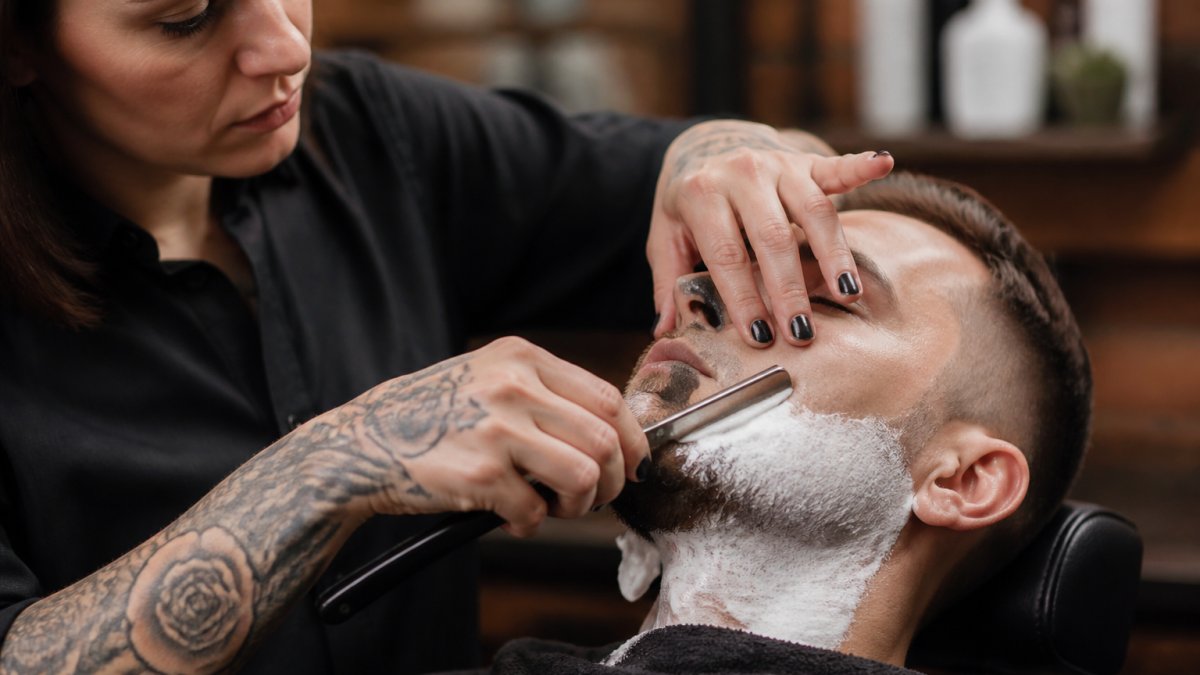
Practice finding this angle on your arm before your face. Once your hand understands the feel, your face becomes easier.
Step 2: Execute the Shaving Strokes
Use short, controlled strokes moving downward with gravity, never push the blade. Start on cheeks using the full blade length, covering about two inches per stroke while stretching skin. Move to the neck with even shorter strokes (one inch) as skin is more delicate. For the upper lip, tuck it under your teeth and use tiny, careful strokes as grain often changes direction. Never go over the same area twice in one pass.
Step 3: Handle Multiple Passes Safely
After your first pass with the grain, a second pass across the grain gives a closer shave but increases irritation and ingrown hair risk. Stretch skin carefully, use shorter strokes, and check blade angle constantly. A third pass against the grain is unnecessary for most men. If new to straight razor shaving, stick with one or two passes until technique is solid. Rinse with cool water after each pass to close pores and check for missed spots.
Post-Shave Care and Skin Soothing
Rinse thoroughly with cool water and pat dry gently. Apply an alum block to small nicks by wetting it and holding it against the cut for a few seconds to stop bleeding and disinfect. Use an aftershave balm (not alcohol-based) to soothe and moisturize, applying a small amount with upward strokes. Let your skin rest at least 30 minutes before applying other products.
Common Mistakes to Avoid
Rushing preparation: Skipping pre-shave oil or using thin lather causes cuts and irritation. Wrong blade angle: Too steep causes cuts; too shallow won't cut. Not stretching skin: Loose skin gets nicked. Going against the grain first: Always start with the grain. Ignoring grain changes: Adjust technique as grain shifts. Pressing down: Let gravity do the work. Skipping aftercare: Poor aftercare leads to irritation and ingrown hairs.
Troubleshooting Straight Razor Injuries
Despite best efforts, nicks and cuts happen, especially during the learning phase. Knowing how to respond immediately prevents infection and minimizes scarring.
Minor nicks: Stop shaving and rinse with cool water. Apply direct pressure with a clean tissue for 30 seconds to one minute. Once bleeding stops, apply an alum block for 5-10 seconds (acts as styptic and antiseptic). If unavailable, use aftershave balm or gentle pressure.
Deeper cuts: Apply firm, continuous pressure with a clean cloth for 2-3 minutes. If bleeding persists, apply an alum block for 10-15 seconds. For cuts that bleed freely after five minutes, apply antibiotic ointment and cover with a bandage. Avoid shaving that area for at least three days.
Razor burn: Results from incorrect blade angle, insufficient lather, or shaving against the grain. Rinse with cool water and apply a soothing balm with aloe vera, chamomile, or allantoin. Avoid alcohol-based aftershaves and hot water for 24 hours.
Ingrown hairs: More common after shaving against the grain or with incorrect blade angle. If infected (red, swollen, painful), apply warm compresses for 10 minutes, three times daily, and use gentle exfoliating scrub. Don't extract yourself; consult a healthcare provider if infection develops.
Weeping or persistent irritation: If your skin continues to feel raw or irritated hours after shaving, you may have a sensitivity to your shaving cream, pre-shave oil, or aftershave product. Discontinue the suspected product and switch to a fragrance-free, hypoallergenic alternative. Apply a plain moisturizer or balm without added ingredients.
Straight Razor vs. Safety Razor: Key Differences
Both straight razors and safety razors offer advantages over cartridge razors, but they're different tools.
A safety razor has a fixed blade guard that protects your skin. This makes it harder to cut yourself. The learning curve is shorter, most men get decent results on their first try. Safety razors are also cheaper to buy initially. The downside: they're less precise for shaping and beard work. You can't get as close to edges.
A straight razor requires more skill but offers more control. The blade is exposed, which means more responsibility, but also more precision. You can shape beards, define lines, and get closer shaves. The initial cost is higher, but one razor lasts forever. Straight razors also require maintenance: stropping before each shave and honing a few times per year.
For most men learning to shave, a safety razor is a good stepping stone. Once you want precision and control, straight razor shaving becomes the natural choice. Whether you're starting with a safety razor or jumping straight to a straight razor, the foundation is the same: proper preparation, correct technique, and good aftercare.
Straight razor shaving isn't just about removing facial hair, it's about taking control of your grooming. The technique takes practice, but the payoff is a closer shave, healthier skin, and a ritual you'll actually look forward to. Our one-chair studio gives you the full attention and expertise you need. Book your appointment today and discover why straight razor shaving has been the barber's choice for generations.
Frequently Asked Questions
What are the primary benefits of a professional straight razor shave?
A professional straight razor shave delivers a closer cut than cartridge razors because the single blade glides along skin without multiple passes that cause irritation. The technique exfoliates dead skin cells, improves skin texture, and reduces ingrown hairs. Many men report smoother skin for days after a straight razor shave, and the ritual itself creates a relaxing grooming experience that builds confidence.
Is straight razor shaving safer than using a modern cartridge razor?
Straight razor shaving is safe when executed with proper technique, blade angle, and skin tension. The single blade actually reduces irritation compared to multi-blade cartridges that tug at hair. However, safety depends on skill and focus. A professional barber's experience ensures you avoid common injuries like razor burn and nicks. If you're learning at home, take time to master grip and angle before attempting multiple passes.
How often should you get a professional straight razor shave?
Most men benefit from a professional straight razor shave every 1-2 weeks, depending on beard growth rate and skin sensitivity. Some prefer weekly appointments for the closest shave and grooming ritual, while others space them further apart. Your barber can recommend a schedule based on your hair type, skin condition, and desired results. Many clients also combine professional straight razor shaves with maintenance shaving at home between appointments.
What skin preparation is required for a traditional straight razor shave?
Proper skin preparation is critical for a comfortable, close shave. Wash your face with warm water to soften facial hair and open pores. Apply pre-shave oil to protect skin and reduce friction. Build a rich lather using a shaving brush with warm water and quality soap or cream. This combination hydrates whiskers, creates slip for the blade, and protects your skin from irritation. The entire prep process takes 3-5 minutes but dramatically improves results.