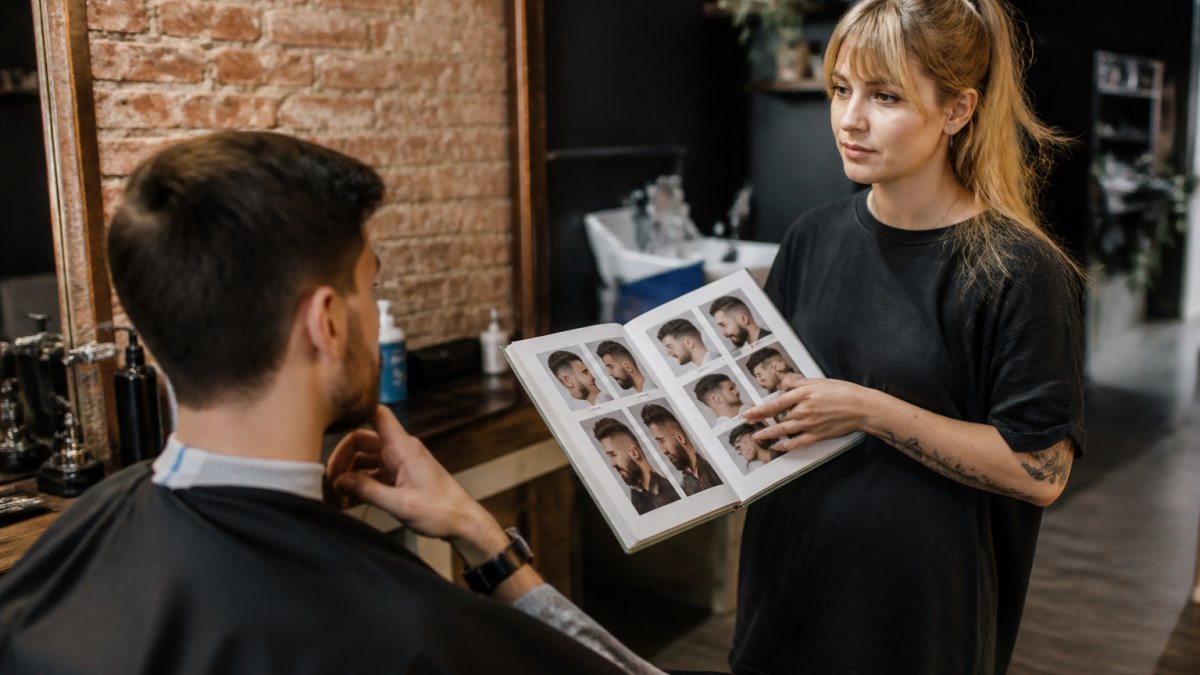
 ultimate-guide
How to Choose a Barber: 2026 Guide to Getting It Right
Table of Contents
- Barbershop vs. Salon: What's the Real Difference?
- How to Assess Technical Skill Before You Sit Down
- How to Explain a Haircut to a Barber (Consultation Script Included)
- Questions to Ask Your Barber Before the First Cut
- Barbershop Etiquette for Beginners: What to Expect
- Red Flags and Dealbreakers When Choosing a Barber
- Hair Type Specificity: Matching Your Barber to Your Hair
- Post-Cut Maintenance: Keeping the Look Between Visits
- Frequently Asked Questions
Last Updated: September 29, 2026
Barbershop vs. Salon: What's the Real Difference?
Learning how to choose a barber starts with understanding what separates a barbershop from a salon. A barbershop is a grooming studio built around clipper work, fades, tapers, and beard shaping, while a salon typically centers on longer scissor cutting, color, and styling services.
How to Assess Technical Skill Before You Sit Down
Judge a barber's skill before the cape goes on, not after. The most reliable signals are a portfolio of real client work, consistent photo quality, and evidence of technique variety across hair textures and styles.
Here's what to look for:
- Portfolio depth. A barber who posts only one fade angle is showing you a highlight reel, not a range. Look for different head shapes, hair densities, and lengths.
- Fresh photos. Timestamps matter. Work from three years ago tells you little about current technique.
- Detail shots. Close-ups of necklines, taper blends, and beard edges reveal precision that wide shots hide.
- Before-and-after pairs. These show transformation skill, not just a good final frame.
How to Explain a Haircut to a Barber (Consultation Script Included)
The single biggest cause of a disappointing haircut is unclear communication, not lack of skill. Learning how to explain a haircut to a barber is a skill you can practice, and a short structured consultation prevents most problems before they start.
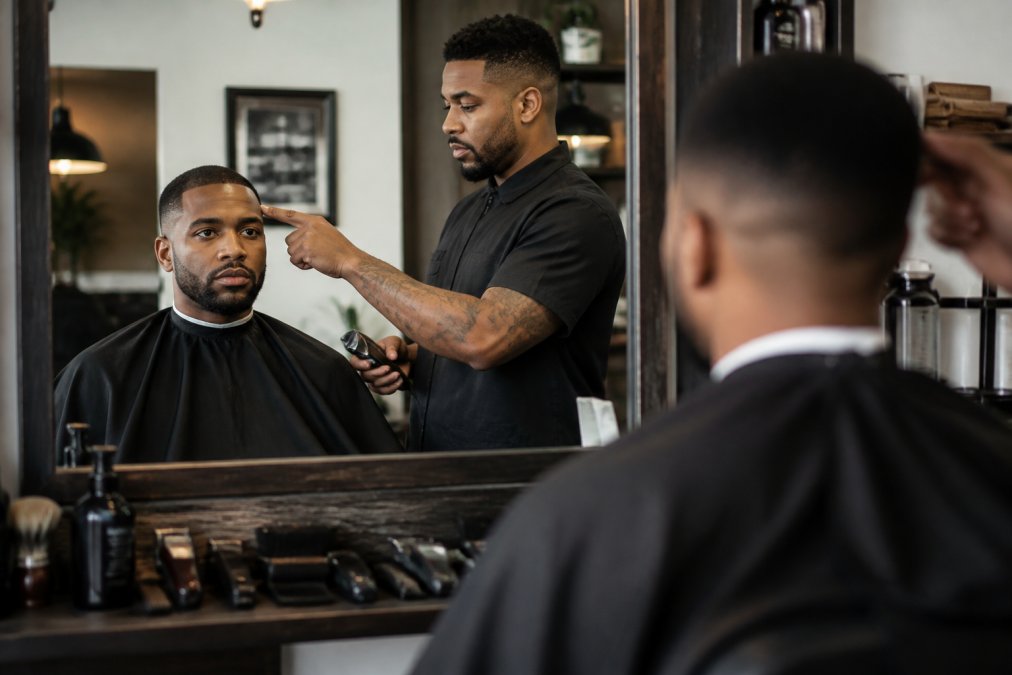
The 60-Second Consultation Script
Use this framework at the start of every appointment. It takes about a minute and eliminates guesswork:
- State the goal. "I want a mid fade with about an inch of length on top, and I like to style it with a matte product."
- Name your reference. "Here's a photo. I like the fade height, but I want the top slightly longer than this."
- Flag your problem areas. "My hair grows fast at the crown and my cowlick pushes forward on the right side."
- Set your maintenance window. "I get cut every four weeks, so I want it to still look good at week three."
- Confirm the plan back. "So that's a mid fade, textured top, clean neckline. Does that match what you're picturing?"
Questions to Ask Your Barber Before the First Cut
A short set of questions before the first cut tells you more than any review site. The right questions reveal how your barber thinks about hair, not just how they cut it.
Ask these:
- "How do you handle my hair growth pattern?" A skilled barber will look at your crown, hairline, and cowlick before answering.
- "What's the maintenance schedule for this cut?" Expect a specific number of weeks, not a vague "whenever it grows out."
- "What styling products do you recommend for my hair texture?" Generic answers signal generic work.
- "How do you handle a skin fade on sensitive skin?" This tests technique and aftercare knowledge.
- "Can you walk me through a straight razor shave if I've never had one?" A good barber explains the process step by step and checks in as they go.
Barbershop Etiquette for Beginners: What to Expect
Barbershop etiquette for beginners comes down to a few unwritten rules that regulars absorb without noticing. Knowing them in advance makes your first visit smoother.
- Arrive on time, not early. A one-chair studio runs on appointments. Showing up 15 minutes early doesn't speed things up.
- Come with dry or towel-dried hair unless told otherwise. Wet hair changes how length reads.
- Speak up during the cut. If the fade line is climbing higher than you want, say so immediately. It's easier to fix mid-cut than after.
- Tip appropriately. Tipping is standard for good service, and cash is always welcome.
- Be honest about past cuts. If a previous barber left your neckline uneven, mention it. It changes how your barber approaches the blend.
Red Flags and Dealbreakers When Choosing a Barber
Certain warning signs should end the search immediately, regardless of how good the reviews look. These are the dealbreakers worth taking seriously.
- No portfolio at all. Every serious barber documents work. A complete absence of photos is a genuine red flag.
- Rushing the consultation. If your barber starts cutting before understanding what you want, expect a generic result.
- Dismissing your reference photos. "That won't work on you" without explanation is not expertise, it's deflection.
- Dirty tools or a cluttered station. Hygiene is non-negotiable. Clippers, combs, and razors should be visibly clean.
- No questions about your hair history. A barber who doesn't ask about your growth pattern, previous cuts, or styling routine is cutting blind.
- Pressure to add services. Upselling a color treatment you didn't ask for is a business tactic, not advice.
Hair Type Specificity: Matching Your Barber to Your Hair
The right barber for your hair type is the one who has demonstrable experience with it. Hair texture, density, and growth pattern all change which techniques work, and not every barber handles every type equally well.
Here's how to match:
- Straight, fine hair. Look for clean scissor work and light product use. Heavy clipper work can make fine hair look thinner.
- Thick, wavy hair. Seek barbers comfortable with texturizing and thinning shears. Density control matters more than fade height.
- Curly or coily hair. Prioritize barbers with a portfolio showing your curl pattern. Curl-specific cutting is a distinct skill.
- Receding hairlines. Ask how your barber handles the hairline transition. A good answer involves blending, not covering.
- Gray or color-treated hair. If you color your hair, look for a barber who offers color services or works alongside someone who does.
| Your Hair Type | What to Prioritize | What to Avoid |
|---|---|---|
| Fine, straight | Scissor cut precision, light product | Heavy clipper work |
| Thick, wavy | Texturizing, density control | Blunt one-length cuts |
| Curly, coily | Curl-specific portfolio | Barbers without curl work |
| Receding hairline | Blending technique | Overly tight hairlines |
| Color-treated | Color service experience | Harsh chemical overlap |
Post-Cut Maintenance: Keeping the Look Between Visits
A great haircut is only half the equation. Post-cut maintenance determines how good your hair looks on day 20, not just day one.
A few habits make a real difference:
- Wash less often than you think. Daily shampooing strips natural oils and flattens most styles. Two to three times a week suits most men.
- Use the product your barber recommended. The right styling product holds a fade's shape without weighing hair down.
- Book your next appointment before you leave. Four-week cycles keep a fade sharp. Waiting until it's grown out means a bigger correction next time.
- Trim your neckline between visits if your barber shows you how. A five-minute touch-up buys you an extra week.
- Condition if you color your hair. Color-treated hair needs moisture to stay healthy between services.
Frequently Asked Questions
How do I know if a barber is good?
Look at their portfolio first. A skilled barber shows consistent fades, clean necklines, and even tapers across different hair textures. Check whether they ask about your hair growth pattern before cutting. During the cut, watch for precision and patience rather than speed. A good barber also explains what they're doing and why, and offers styling advice you can repeat at home. Client satisfaction shows in repeat business and referrals, not just social media likes.
How do you tell a barber exactly what you want?
Bring photos from at least two angles, front and side. Describe the guard number you usually get for your fade, how high you want the taper to sit, and whether you prefer a scissor cut on top or clipper work. Mention your hair growth pattern and any cowlicks. If you're unsure, ask the barber to walk you through options before they start. A brief consultation prevents surprises and gets you closer to the result you pictured.
What are the signs of a professional barbershop?
Clean tools, fresh capes, and sanitized clippers between every client are non-negotiable. A professional shop also has clear communication, a relaxed atmosphere, and barbers who take time for consultation rather than rushing you into the chair. Look for consistent results in their portfolio and whether they ask about your hair health, not just the style. Appointment flexibility and transparent pricing also signal professionalism.
How often should you visit a barber to maintain your style?
Most fades and tapers need a touch-up every two to three weeks to stay sharp. Scissor cuts and longer styles can stretch to four to six weeks. If you have a beard trim paired with your haircut, two weeks keeps the lines clean. Your hair growth pattern and how fast your hair grows will shift that timeline. Ask your barber to recommend a schedule based on your specific cut and growth rate.
What is the difference between a salon and a barbershop?
Barbershops focus on clipper-driven cuts, fades, tapers, and beard work, often with straight razor shaves. Salons typically handle longer styles, color, and scissor work with a broader range of services. The training paths differ too. Barbers specialize in precision fading and men's grooming, while hair stylists train across cutting, coloring, and texture work. Your choice depends on whether you want a technical fade or a more layered, styled look.
Is a 20% tip standard for a haircut?
Twenty percent is a solid baseline for good service in most barbershops. If your barber took extra time on a skin fade, shaped your beard, or walked you through styling products, 20% to 25% reflects that effort. For a quick neckline cleanup, a few dollars is fine. Cash tips are always appreciated, though many shops now offer digital tipping at checkout. Consistency in tipping builds a stronger relationship with your barber over time.